



BIM coordination copilot
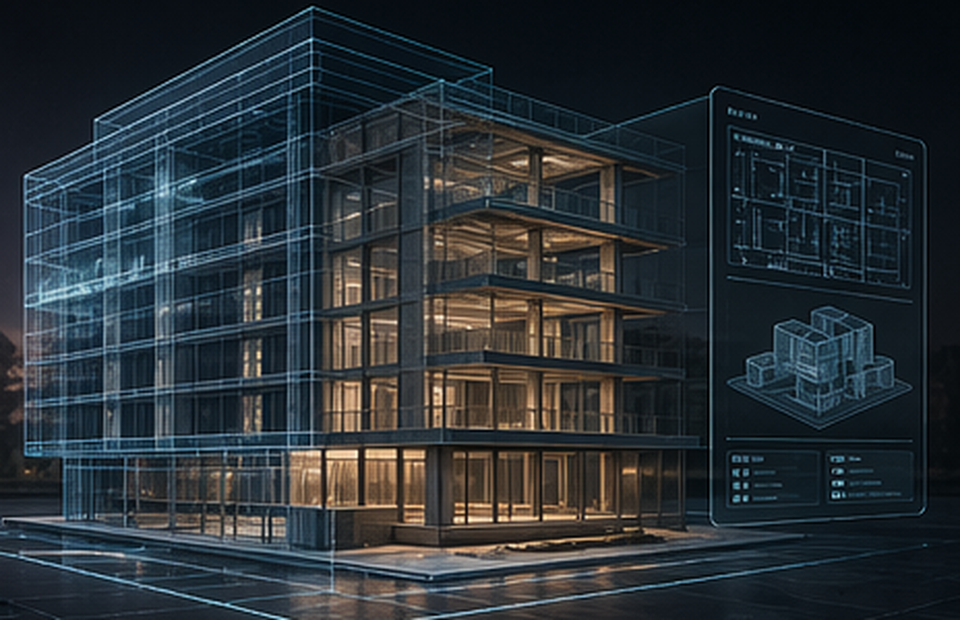
The agent reviews federated models, finds likely conflicts, and produces structured coordination notes engineers can actually use.
From autonomous structural analysis to intelligent construction management — exploring how LLM-powered agents are transforming every facet of civil engineering.
Autonomous systems that perceive their environment, reason about goals, take actions, and learn from outcomes — moving far beyond simple prompt-response AI.
From symbolic AI to long-horizon agent systems
Early AI framed intelligent systems as agents that perceive, maintain state, pursue goals, and choose actions through explicit reasoning.
This era was dominated by search, planning, knowledge representation, and expert systems built from hand-authored rules.
Search, planning, rule engines, expert systems
Modern agent design still inherits this core idea: intelligence is not just answering, it is acting under constraints.
Generated system visual
Reliable taxonomy
The simplest useful layer is a language model connected to retrieval, tools, structured outputs, or shared state. This is broader than chat, but not always a full agent yet.
When the sequence is mostly known ahead of time, routing, chaining, retries, and approval gates should stay explicit. Many so-called agents are better understood as workflows.
A true agent repeatedly plans, acts, observes, and decides when the task is complete. This is often the right default before introducing multiple specialist agents.
Multiple agents become useful when the prompt logic, tool surface, or review burden becomes too large for one runtime loop. Typical patterns are manager-worker, handoff, and critique-reviewer systems.
Reliable agents stay grounded with retrieval and tool observations, stay coherent with summaries and memory, and stay safe through permissions, evals, and clear stopping conditions.
Click a stage to inspect how a modern agent actually runs.
Nine civil-engineering subfields where agent systems are already becoming useful, from structural sensing and digital twins to transport, construction, and evacuation safety.
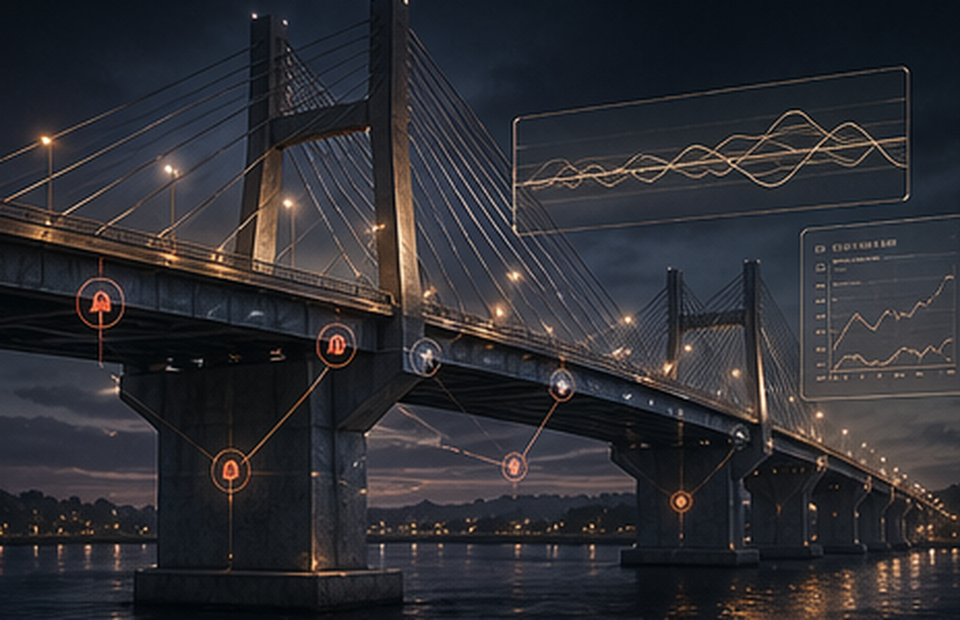
Agents fuse sensor streams, imagery, and maintenance history to flag anomalies, rank likely damage mechanisms, and trigger follow-up inspections across bridges, buildings, and dams.
LLM-driven agents query BIM and IFC models in natural language, surface coordination issues, and keep digital twins current with field observations and operational data.
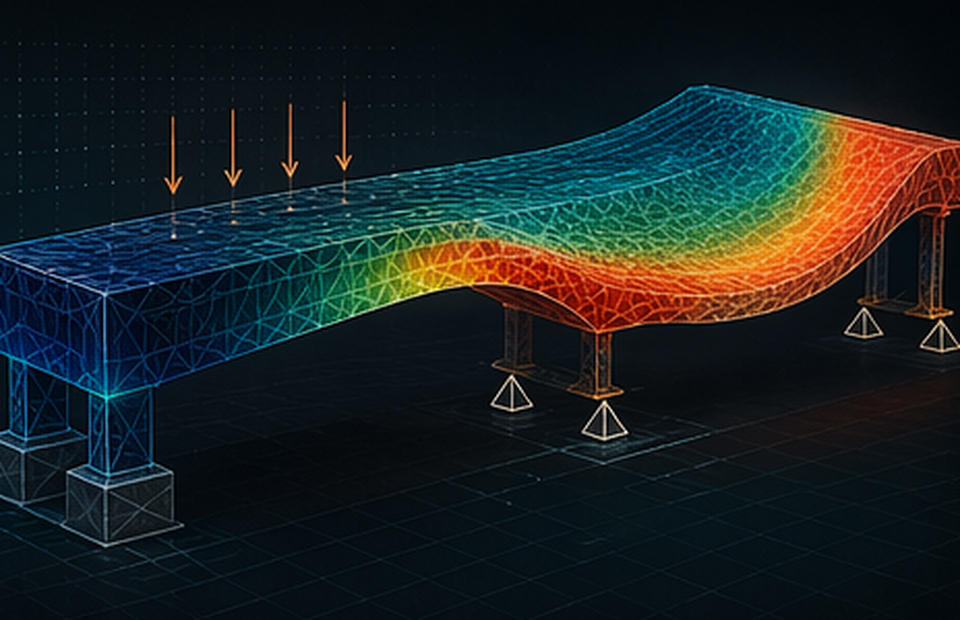
Agentic simulation workflows can translate problem statements into boundary conditions, meshing, solver runs, and result summaries for faster structural analysis loops.
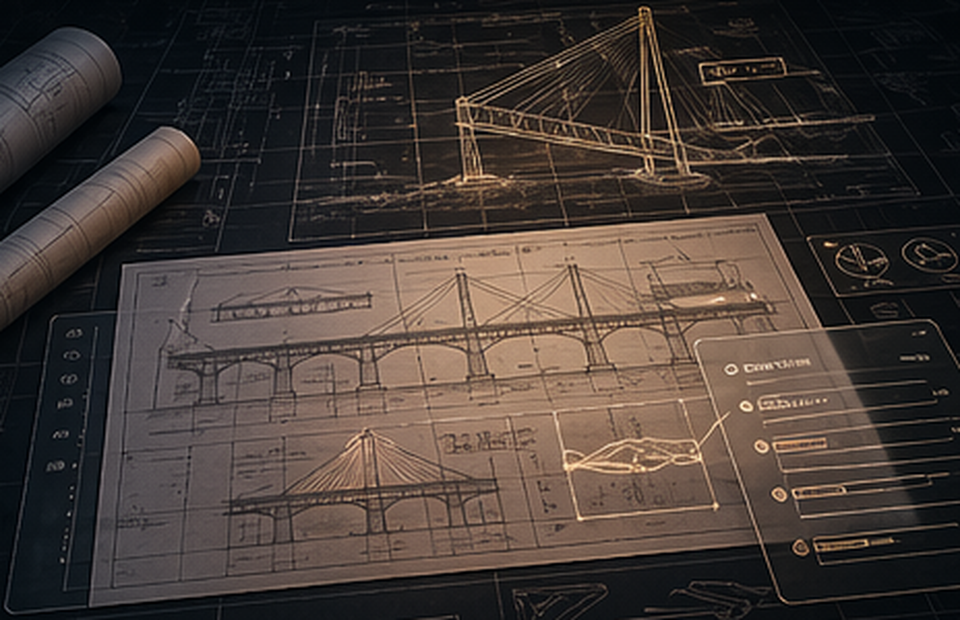
Design agents parse CAD files and markups, apply revision rules, and generate cleaner drawing updates for detailing, code checks, and reinforcement layout changes.
Vision-language agents review drone, mobile, and field captures to detect cracks, corrosion, and spalling, then prioritize defects for engineers and asset owners.
Multi-agent control systems optimize intersections, corridor flows, and transit coordination by combining simulation, sensing, and adaptive signal decisions.
Project agents summarize RFIs, progress, weather, and supply signals to highlight risk, recommend schedule moves, and support safer, more coordinated delivery.
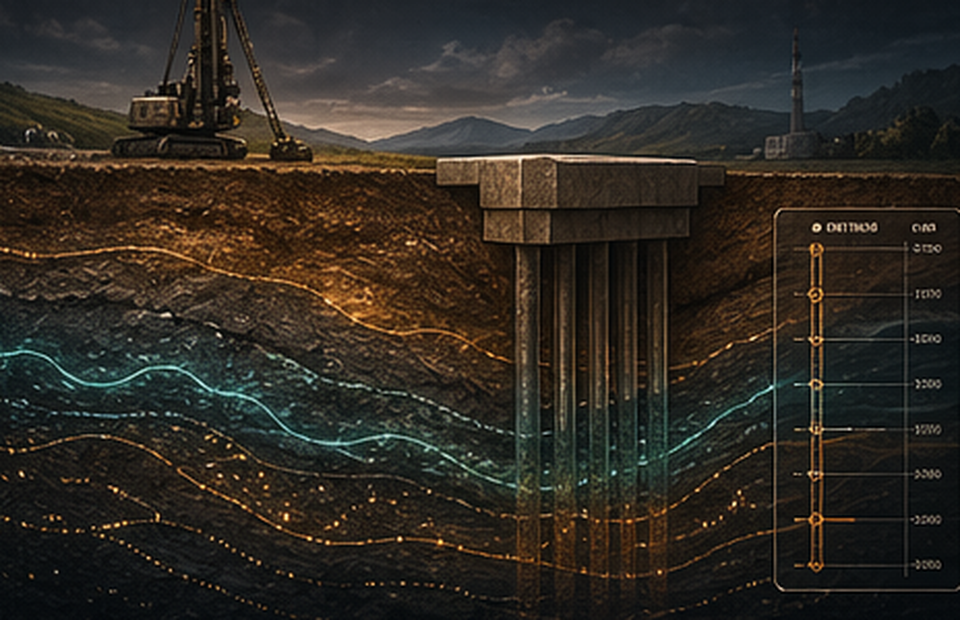
Agents interpret borings, maps, groundwater, and monitoring data to support slope stability reviews, site characterization, and environmental risk assessment.
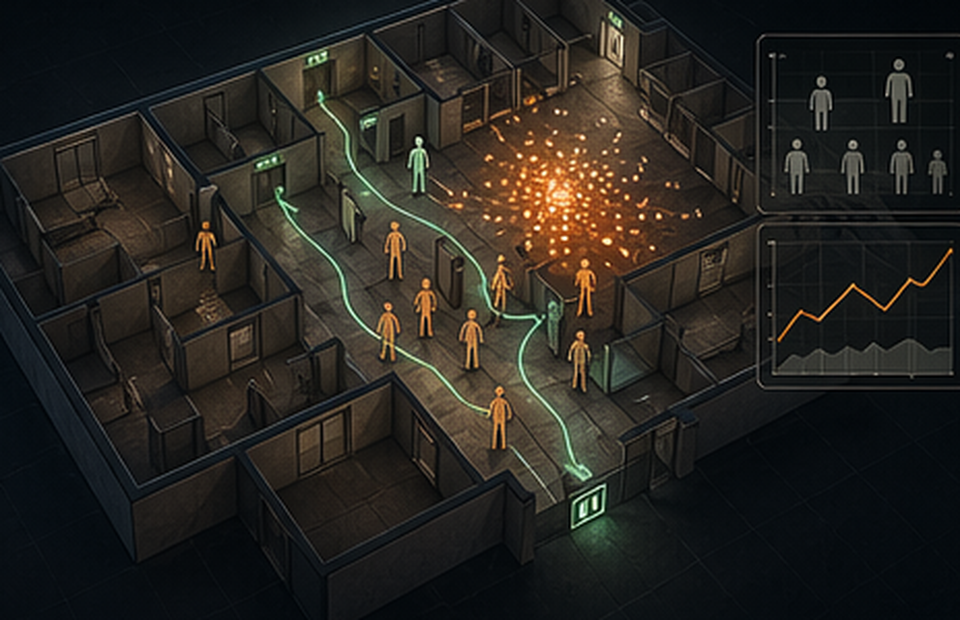
Safety agents combine occupancy data, routing logic, and scenario reasoning to support evacuation planning, inclusive wayfinding, and emergency decision support.
This is the operating layer that matters most for real civil-engineering agents: Skills package reusable engineering procedure, while MCP gives the agent live access to models, files, databases, and controlled actions.
For civil-engineering agents, model quality alone is not enough. The agent needs reusable playbooks for QA, naming, reporting, and review logic, and it needs live access to BIM models, inspection evidence, project systems, and structured engineering data. Skills handle the procedure layer. MCP handles the connection layer.
"Review this Revit / IFC package, flag coordination issues, and draft an engineer-ready issue log."
A BIM QA skill brings the naming rules, review checklist, citation format, and delivery standard the agent should follow every time.
MCP exposes the model, specs, issue tracker, and project database through tools, resources, and prompts instead of forcing everything into a giant prompt.
The result is not generic chat. It is a traceable civil workflow: cited findings, structured tickets, reusable reports, and controlled actions in real systems.
The Model Context Protocol is an open-source standard for connecting AI applications to external systems. In practice it turns a civil agent from a smart narrator into a system that can read models, query databases, pull files, and call approved actions in the environments where engineering work actually lives.
Model-called actions, such as creating issue tickets, running database queries, exporting reports, or launching controlled workflows.
Read-only context, such as IFC properties, design specs, sensor histories, inspection archives, or project documentation.
Reusable templates that help users invoke structured workflows like a bridge-inspection brief or an RFI drafting pattern.
In civil engineering, MCP should be the way the agent reaches the model, the asset record, the code library, and the project system it must act inside.
Without Skills, outputs drift away from engineering procedure. Without MCP, the agent hallucinates because it cannot see the model, the asset history, or the project system. The useful civil agent sits exactly at their intersection.
The agent reviews federated models, finds likely conflicts, and produces structured coordination notes engineers can actually use.
The agent triages inspection evidence, compares it to historical records, and drafts a defect log that follows the organization’s reporting standard.
The agent reviews corridor conditions and supports intervention decisions instead of merely summarizing transportation data in plain language.
The agent evaluates scenarios, checks facility context, and produces decision support that respects inclusive routing and safety constraints.
These are the high-value patterns that show up across Anthropic’s Skill guidance and the MCP documentation, and they map cleanly to engineering practice.
Use specific task language, keep scope tight, and put critical validations near the top. A "bridge-inspection-reporting" skill is far better than a vague skill that "helps with projects."
Use MCP resources for model context and records, MCP tools for controlled actions, and MCP prompts for structured workflows. Do not rely on stale copy-pasted exports when the system can connect directly.
For civil use cases, the best pattern is often phased execution: inspect, validate, cross-check, then write or act. Skills define the sequence and QA logic; MCP carries the data and tool calls through each phase.
This set gives you the next layer: foundational prompting context, Claude Code workflow context, and concrete skill repositories you can study, install, or adapt.
These cover prompt structure, real-world LLM workflow, Claude Code usage, and a broader framing of agentic AI systems.
If you want official templates, community curation, or places to discover reusable skill patterns fast, start with these five links.
These examples are useful precisely because they are scoped: paper finding, research assistance, writing cleanup, and scientific workflows.
Official briefings, explainers, and platform notes worth tracking if you care about agent-adjacent AI in civil engineering, BIM, digital twins, inspection, and transport operations.
One of the strongest practical entries from the user-specified channel because it connects agent tooling, Revit workflows, and Open BIM rather than staying at the generic-AI level.
Watch on YouTube Workflow breakdownA short, concrete check on what Autodesk is actually shipping into Revit, which is more useful for practitioners than broad future-of-AI discussion.
Watch on YouTube Product reality checkA practical onboarding video for model-interaction workflows that starts to look like an engineering copilot, not just a chat interface attached to BIM files.
Watch on YouTube Hands-on setupShort but accurate context for why digital twins matter in AEC and infrastructure, especially if the page reader needs the conceptual bridge from models to operational systems.
Watch on YouTube Concept primerA stronger construction pick than generic AI talks because it stays anchored in project delivery, data workflows, and operational uses inside the built-environment stack.
Watch on YouTube Construction workflowA concise bridge-inspection example from Bentley showing how digital twins and visual workflows are being positioned for real infrastructure asset management.
Watch on YouTube Infrastructure inspectionThis adds a transportation systems perspective, showing how digital twins and open data become decision-support infrastructure rather than just building-scale visualization.
Watch on YouTube Network decision supportA concise industry-level summary connecting AI-driven twins to the broader data and compute infrastructure they actually require, which keeps the story grounded.
Watch on YouTube Short industry contextASCE’s running hub for the profession-level conversation around AI in civil engineering, including panels, articles, and member discussion about real deployment risks and opportunities.
Open ASCE hub Professional landscapeASCE’s January 16, 2026 feature frames the practical tradeoff clearly: AI can improve traffic, inspection, and maintenance workflows, but it also raises reliability, energy, and infrastructure-capacity concerns.
Read the balance discussion ASCE Thursdays@3Published March 25, 2026, this ASCE piece focuses on the workforce side of adoption: data hygiene, guardrails, and what human responsibility still looks like when firms start using AI systems more seriously.
Open the practice article Workforce + guardrailsAutodesk positions AI as workflow acceleration rather than magic: draft RFIs faster, surface risk sooner, and reduce repetitive busywork across preconstruction and field coordination.
View Autodesk workflow page AI in project deliveryA current governance reference from July 10, 2025 on data integrity, privacy, transparency cards, and why construction customers are demanding AI features they can actually trust.
Read the blueprint Trusted AI guidanceAutodesk’s December 11, 2024 explainer is useful because it explicitly traces digital twins from BIM and IoT into predictive and eventually autonomous operating models.
Open the digital twin explainer Concept + maturity levelsAn Autodesk University session focused on the BIM-to-GIS merge that underpins usable digital twins for large asset portfolios, corridors, and multi-scale infrastructure programs.
View the AU class AECO twin workflowsThis Autodesk University article is a good owner-operator reference: it explains how BIM becomes operationally useful only when it is connected to live asset data and analytics.
Read the owner workflow article BIM beyond handoverA practical Tandem session on digital twin maturity, outcomes, and what data structure is required before owners can actually extract value from lifecycle information.
Open the Tandem session Owner-operator playbookTrimble’s Digital Construction Summit 2024 panel is useful because it mixes optimism with industry concerns, including legal risk, implementation reality, and governance across the built environment.
Open the Trimble panel Digital Construction Summit 2024Trimble’s January 3, 2024 outlook is operationally grounded: centralize project data, ask better questions, and do not trust AI outputs blindly in a safety-critical industry.
Read Trimble’s outlook Practical setup adviceA straightforward Trimble guide explaining the handoff from BIM to connected operations, with IoT as the link that turns model data into a living digital twin.
Open the Trimble guide BIM meets IoTBentley’s overview is still one of the clearest infrastructure-side summaries of the twin model: combine engineering, reality, geospatial, and IoT data to improve decisions across design, construction, and operations.
Explore Bentley twins Infrastructure lifecycle viewPublished March 25, 2026, this Bentley case story shows drones, digital models, and AI analysis being used to inspect a historic bridge faster, more safely, and with less field exposure.
Read the bridge case AI-guided inspection workflowBentley’s January 12, 2026 TRB briefing ties AI and connected data directly to transportation policy, research, and investment rather than treating digital twins as isolated software demos.
Open the TRB briefing Transport policy + twinsA field-to-office inspection system for bridges, tunnels, roads, rail, and transit assets, with a concrete view of how digital inspection workflows become operational systems instead of slideware.
Explore AssetWise Inspection operations stackA broader repo shelf: civil benchmarks, BIM workflows, agent systems, MCP infrastructure, and applied safety research worth opening before the framework docs.
Benchmark suite for civil engineering drawing automation, useful when you want to test whether an agent workflow actually improves drafting tasks instead of just demoing well.
A BIM-focused code agent prototype that ties LLM prompting to model-side work instead of leaving the assistant detached from project geometry and metadata.
Reusable n8n patterns for approvals, extraction, notifications, and orchestration when you want agent behavior without hand-coding the whole automation stack.
Interactive transformer visualization for teaching attention, token flow, and model internals before students start treating agents like a black box.
Extensible Nous Research agent stack positioned as “the agent that grows with you,” built around tools, skills, plugins, and multi-surface workflows.
Self-evolving agent repo that grows a skill tree from a compact seed and targets broad system control with lower token usage.
ByteDance’s long-horizon SuperAgent harness for research, coding, and creation with memories, tools, skills, sandboxes, and subagents.
Microsoft’s open-source agent training repo, useful when you want to improve agent behavior beyond prompt tweaking and static workflows.
Open-source MCP server for databases from Google APIs, useful when agents need structured access to SQL backends through MCP.
Computer-vision crowd mobility analyzer with YOLO, Kalman tracking, PedPy plots, and pedestrian-vehicle interaction analytics.
Research-grade multimodal traffic safety app for live streams and recorded video, built around vision-language model analysis.
Research-grade Streamlit dashboard for EEG analysis in evacuation scenarios, with preprocessing, mapping, anomaly detection, clustering, and AI reporting.
Core orchestration libraries, kept separate from the domain-specific repos above.
Postdoctoral Researcher at Texas State University,
AI in Transportation Lab.
Research in causal AI, computational epistemology, complexity, and safety.
My work focuses on how intelligent systems build and apply knowledge in dynamic, safety-critical environments — with emphasis on pedestrian dynamics, evacuation science, and causal reasoning. I integrate AI, human behavior modeling, causal inference, and simulation to design decision-support tools that are robust, explainable, and inclusive.